 Open full image
CT HCC November 2026 Newsletter
Welcome to the CT HCC Newsletter, a one-stop shop for activities of the Connecticut Health Care Coalition (CT HCC) and its partners.
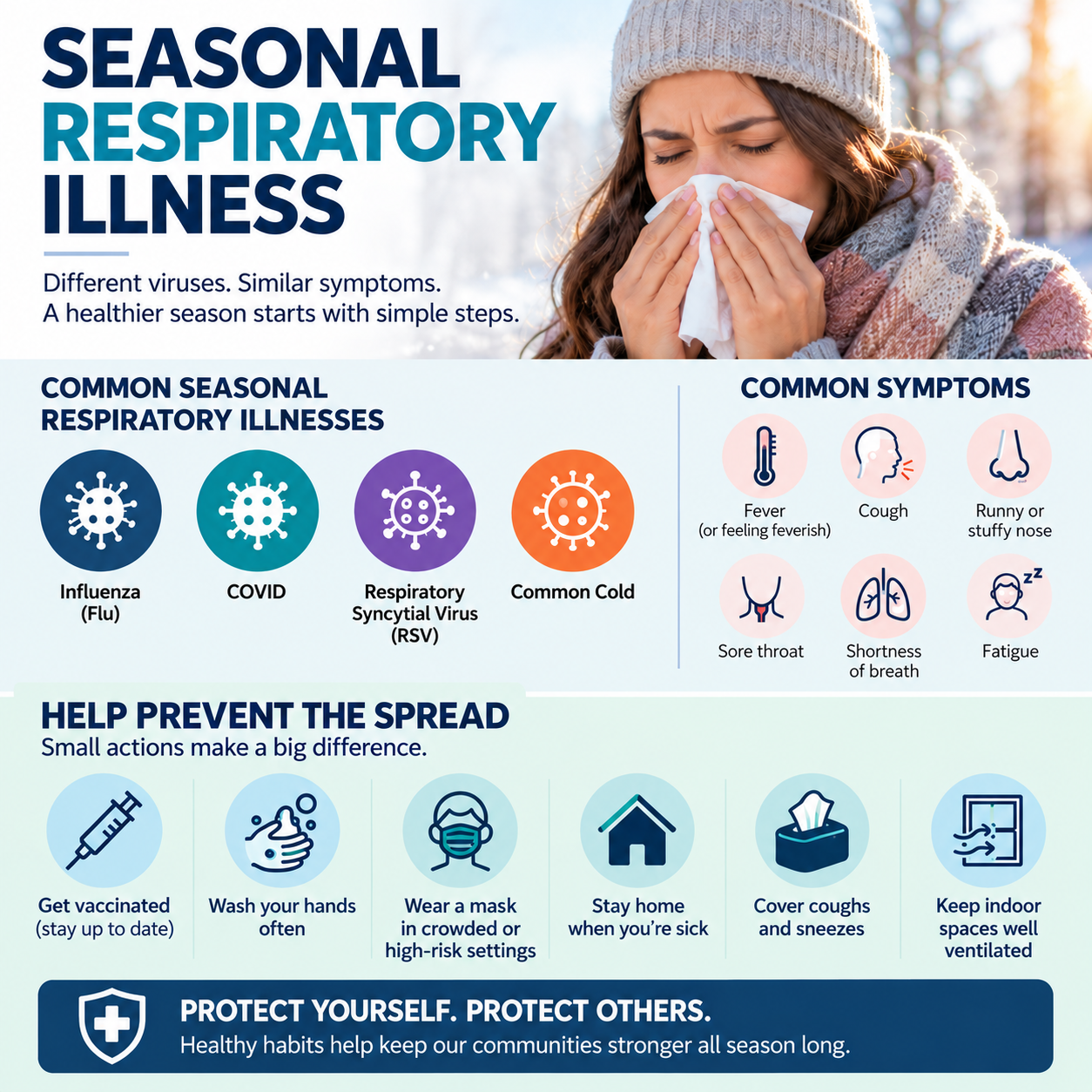
Seasonal Respiratory Illness and Surge Planning
Winter is quickly approaching, bringing with it the peak season for respiratory illnesses such as Influenza, COVID-19, and RSV. The cold weather leads to more indoor gatherings and creates ideal conditions for viruses to spread. It is important to consider both how to prevent transmission and how to mitigate the impact on communities and healthcare systems.
Healthcare Surge Preparedness
As cases of respiratory illness continue to rise, healthcare systems may become strained as demand increases. These impacts are not limited to any single healthcare setting, and present unique challenges to a wide range of organizations, including hospitals, emergency medical services (EMS), and long-term care (LTC) facilities.
Supply chain pressures in the winter months can make it difficult to acquire essential items on demand. To mitigate the effects of potential shortages, all healthcare systems should confirm they have an adequate supply of masks, gloves, face shields, antibacterial soaps and hand sanitizers, and point-of-care testing kits as they apply to the organization’s individual needs. This requires maintaining thorough and up-to-date inventories as well as pre-ordering essential items ahead of time before there becomes an urgent need.
Hospitals, emergency departments, and urgent care centers should anticipate higher patient volumes, longer wait times, and increased admissions. These facilities should be prepared to activate surge protocols for increasing bed capacity or opening alternate care sites to accommodate the expected increase.
EMS providers should expect increased call volumes and wall times. Transport companies may consider reminding both dispatchers and responders to be aware of diversion status at receiving hospitals and alternate drop-off destinations.
LTC and nursing facilities can face unique challenges as respiratory illnesses have the potential to spread quickly among residents who are often more vulnerable to infection. These facilities should review outbreak response protocols and ensure staff members are prepared to implement cohorting procedures if indicated.
During extreme respiratory surges lasting several weeks to months, coordination among coalition partners can prevent any one organization from becoming overwhelmed. Organizations should communicate updates on capacity and supply needs regularly to promote situational awareness and expedite the redistribution of resources if necessary. This can include sharing information on bed availability, staffing shortages, and ambulance turnaround delays. With early communication, coalition partners can respond quickly before available resources are exhausted.
Community Prevention
Organizations can play an important role in preventing the spread of respiratory illnesses by sending out reminders to personnel and posting educational materials in shared spaces to promote awareness. This can include information on proper hand hygiene, staying home or wearing masks while symptomatic, and taking extra precautions around young children, older adults, and other immunocompromised individuals. Organizations may also consider providing face masks and hand sanitizer at facility entry points to encourage precautionary behaviors.
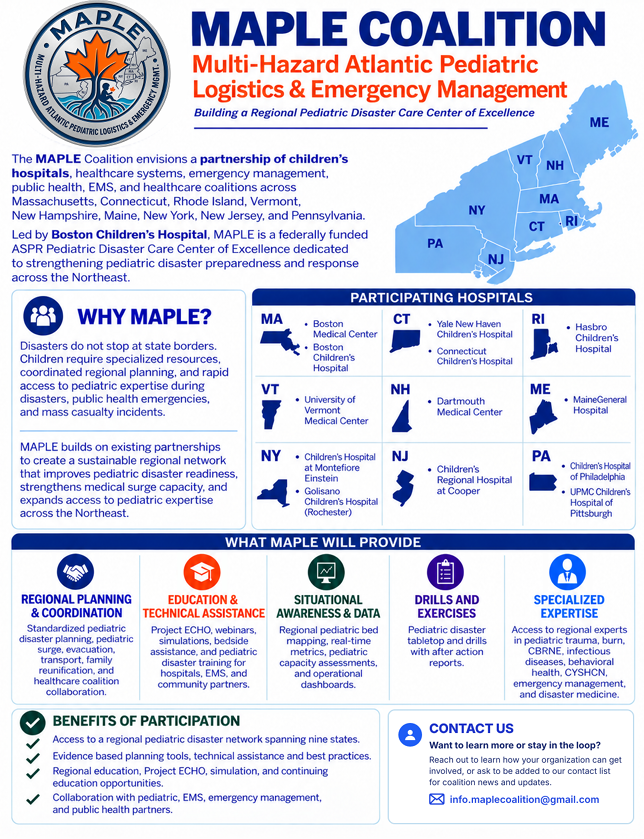
Exciting News: Introducing MAPLE!
We’re excited to celebrate the launch of MAPLE (Multi-Hazard Atlantic Pediatric Logistics and Emergency Management), an important initiative focused on strengthening pediatric disaster preparedness and response across the Atlantic region. Led by Boston Children's Hospital, MAPLE is a federally funded ASPR Pediatric Disaster Care Center of Excellence dedicated to strengthening pediatric disaster preparedness and response across the Northeast. By bringing together partners and expertise, MAPLE aims to improve coordination, enhance emergency planning, and strengthen the healthcare system’s ability to meet the unique needs of children during disasters and other large-scale emergencies.
This collaborative effort represents an exciting step forward in ensuring pediatric needs are prioritized in emergency management and response. We look forward to following MAPLE’s progress and are enthusiastic about the opportunity to build a future partnership, share expertise, and work together to advance pediatric disaster preparedness and resilience!
Join the Connecticut Health Care Coalition
Preparedness is stronger when we work together! The Connecticut Health Care Coalition (CT HCC) welcomes organizations and individuals committed to strengthening healthcare preparedness, response, and recovery across the state.
Membership provides opportunities to connect with partners, share resources and best practices, participate in training and exercises, and help shape statewide preparedness initiatives.
Know an organization or colleague who would benefit from joining? Help us grow our network by sharing the benefits of CT HCC membership and encouraging others to get involved.
Membership Agreement Form
Disaster Available Supplies in Hospitals (DASH) Tool
Disaster Available Supplies in Hospitals (DASH) is an interactive tool designed by ASPR TRACIE, with support from Healthcare Ready, that can help hospital emergency planners and supply chain staff estimate supplies that may need to be immediately available during various mass casualty incidents (MCI) and infectious disease emergencies based on hospital characteristics. The DASH Tool recommends average par levels for specific supplies that acute care hospitals may need to have on hand to respond to a disaster in their community until resupplied. Recommendations are based on user inputs about the size of the hospital, risks in the community, regional role/designation of the hospital, and other factors.
The DASH Tool is comprised of several modules which, taken together, can provide hospitals a holistic view of the supplies needed to address various types of incidents. Each module also incorporates pediatric sizes and specific medication needs as appropriate to the incident. Most users will elect to complete one module or a segment of the module per sitting as inputs cannot be saved in the tool. Please read the instructions and refer to them as you complete each module.
Access the DASH Tool
Non-Critical Information Sharing
CT HCC Strategic Plan in Action: Building Preparedness Through Training & Exercises
Strategic Priority 3: Offer and Support Multi-Disciplinary Coalition Emergency Preparedness Activities
The Connecticut Health Care Coalition continues to advance Strategic Priority 3 by creating and promoting opportunities that strengthen preparedness across our diverse health care and response community. This priority focuses on connecting partners with meaningful training and exercise opportunities and sharing those opportunities through email, the CT HCC website, coalition meetings, and other communication methods.
Planning is already underway for several major 2027 activities, including the 2027 CT HCC Annual Conference and a Functional Medical Surge Exercise that will provide partners an opportunity to practice coordination, communication, resource management, and medical surge response across disciplines.
In addition, the Coalition is working with the Executive Committee to identify other training and education priorities that reflect the needs of our members and emerging preparedness challenges. To further support workforce development, CT HCC is partnering with Hartford HealthCare to make Continuing Education Units (CEUs) available for at least two Coalition educational offerings. Hartford HealthCare will serve as the CEU provider and award continuing education credits.
These activities are about more than checking a box, they are opportunities to learn together, practice together, and strengthen the relationships and capabilities we will rely on during a real emergency.
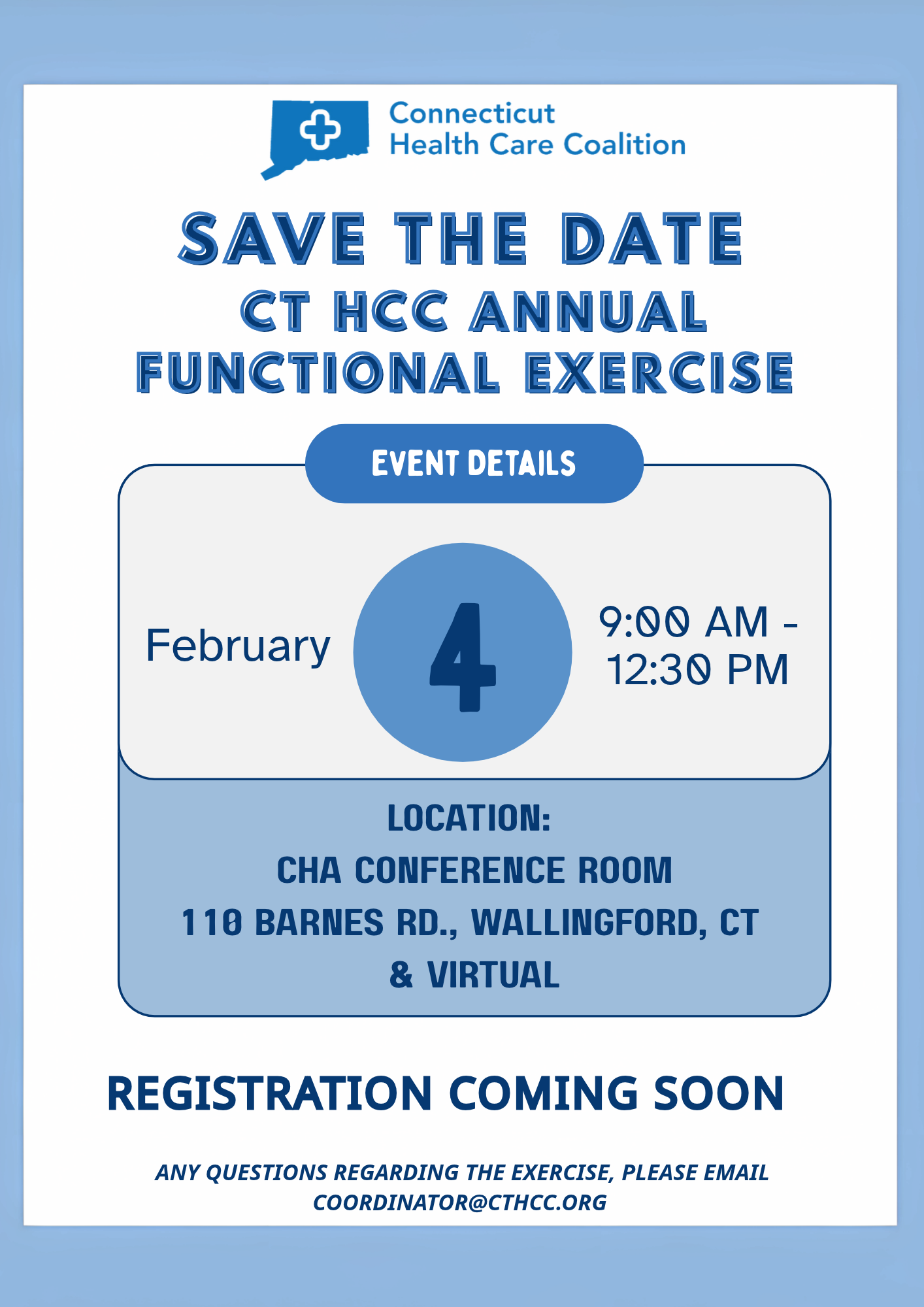
Save the Date: CT HCC Functional Exercise
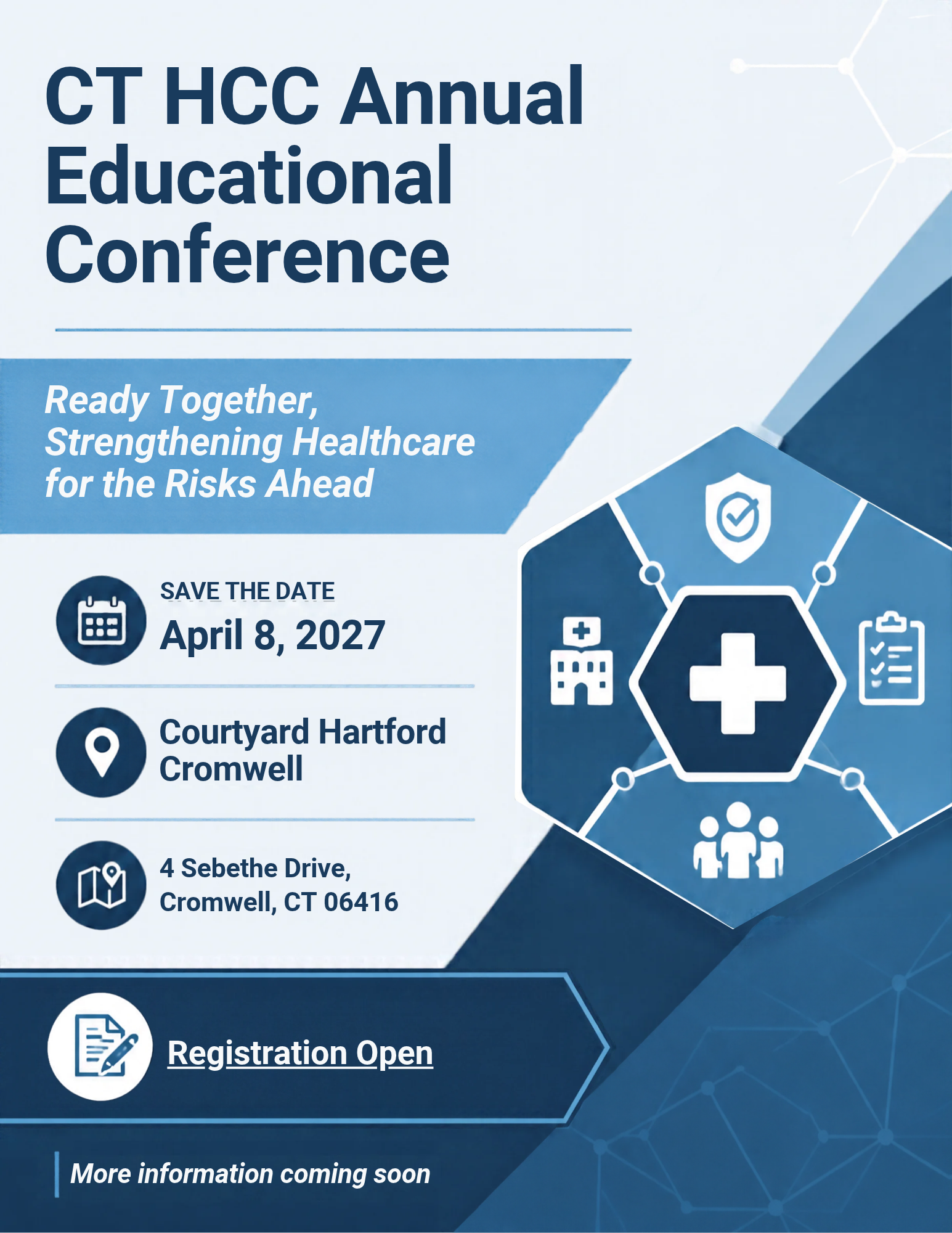
CT HCC Annual Educational Conference Registration is Open
"Ready Together, Strengthening Healthcare for the Risks Ahead"
Join us for a day of learning, collaboration, and connection! Registration is officially open for the 2027 Connecticut Health Care Coalition Annual Conference. This annual event brings together healthcare professionals, emergency preparedness partners, and response organizations from across the state to share insights, strengthen partnerships, and enhance healthcare readiness and resilience.
Don't miss this opportunity to connect with colleagues and be part of the conversation! Additional details, including the agenda, speakers, and session topics, will be announced soon.
Register today and secure your spot!
Register here
Save the Date: CT HCC December Bimonthly Meeting

Please save the date for our next CT HCC Bimonthly meeting, which will be held on Wednesday, December 9, from 11:30-1:30 PM virtually via Zoom. Registration for this meeting is required.
Register here
FEMA Virtual Training Opportunity
The Prehospital Mass Casualty Incident Operations course prepares participants to effectively respond to mass casualty incidents (MCI). Emergency medical service (EMS) responders may provide emergency medical care during an MCI. During the response phase, EMS responders perform life-saving procedures in the warm and cold zones of the incident. In addition, they must use appropriate personal protective equipment (PPE) while providing casualty triage, treatment, and transport.
Prehospital Mass Casualty Incident Operations - Center for Domestic Preparedness
Join a CT HCC Workgroup

If you are interested in participating in coalition planning efforts and/or learning more about health care coalition preparedness, consider joining one of the following workgroups:
- Exercise Planning Workgroup: Designs, plans, and evaluates exercises; promotes exercise participation and improvement; strengthens capabilities through real-world scenarios.
- Information Sharing Workgroup: Enhances information sharing and situational awareness; identifies and addresses communication gaps; supports technology solutions and interoperability.
- Planning Workgroup: Leads development and maintenance of coalition plans and annexes; promotes planning initiatives by ensuring plan cohesion; identifies subject matter experts for hazard specific planning.
- Training & Education Workgroup: Identifies training needs across the coalition; coordinates and promotes training opportunities and resources; supports continuing education and workforce development.
If you are interested in being a part of any of these workgroups, please email our team at coordinator@cthcc.org to be added to upcoming calendar invites.