
HAPPY NEW YEAR
As we welcome the New Year, we have an opportunity to reflect on the progress made across our coalition and to recommit to the shared mission of healthcare preparedness. The start of the year is a natural point to reassess plans, refresh partnerships, and ensure that our systems are ready to respond whether to daily operational challenges or large-scale emergencies.
Healthcare preparedness is strongest when it is collaborative. Over the coming year, the coalition will continue to emphasize coordinated planning, information sharing, and joint training and exercises that strengthen our collective readiness. From surge planning and staffing resilience to communications, transportation, and alternate care strategies, preparedness is not a single activity but an ongoing process that benefits from consistent engagement across all partner organizations.
As we move forward, we encourage all members to take time early in the year to review their emergency operations plans, update contact and resource information, and identify opportunities to participate in coalition activities. By maintaining a proactive focus on preparedness, we ensure that our healthcare system remains resilient, adaptable, and ready to protect our communities no matter what challenges the New Year may bring.
What is in this volume:
The Region 1 Regional Disaster Health Response System (RDHRS) and the Patient Movement Capability
Lessons Learned from the National Healthcare Coalition Preparedness Conference
Reunification Planning: Not Just for Schools
2026 CT HCC Annual Conference Registration is Open
emPOWER Emergency Planning De-identified Datasets (December 2025)
Connecticut Joins the Nurse Licensure Compact
Also look for new training posted
Welcome Lia Randazzo

Lia Randazzo is joining All Clear Emergency Management Group as the new Readiness and Response Coordinator for the Connecticut Health Care Coalition. Prior to joining this team, Lia worked in non-profit program management, supporting several public health leadership academies focused on multi-sector leadership development and equity-informed strategies geared towards creating impactful public health initiatives and healthier communities. With her, she brings a wide range of experience in planning, project management, and stakeholder engagement.
Lia has a Master of Public Health in population and family health with a certificate in social determinants of health from Columbia University Mailman School of Public Health, as well as a Bachelor of Science in Anthropology & Geography from California Polytechnic State University, San Luis Obispo. In her free time, she enjoys cooking, hiking, and reading fantasy and science fiction. Lia lives with her husband and feisty tabby cat in New Haven, CT.
The Region 1 Regional Disaster Health Response System (RDHRS) and the Patient Movement Capability
The Region 1 RDHRS is a program funded by the US Department of Health and Human Services’ Administration for Strategic Preparedness and Response (HHS ASPR) that supports hospitals and healthcare organizations across New England to work together in our collective planning and response for catastrophic emergencies. The Region 1 RDHRS partners with healthcare, governmental and community leaders to support optimal healthcare disaster planning and response, ensure clinical expertise is integrated into emergency response, and enhance clinical surge capabilities across the Region 1 healthcare community.
The Region 1 RDHRS is excited to participate in the upcoming CT HCC MRSE and share more on the program’s Patient Movement Capability, which can coordinate large-scale movement of patients into and out of hospitals with a state or across the New England Region during a disaster. This capability can be requested by a State Department of Public Health during large scale mass patient movement events. The technology utilized is the Patient Movement Platform, a web-based system that allows for efficient patient distribution. For more information about the RDHRS Patient Movement Platform and the Patient Movement Capability, please view this demonstration and review the RDHRS Response Center Concept of Operations and Patient Movement Annex.
National Healthcare Coalition Preparedness Conference Reflection
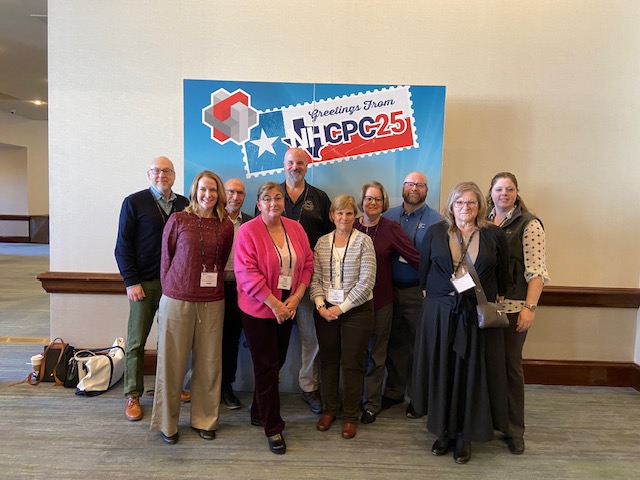
One of the most valuable aspects of attending NHCPC was the opportunity to spend meaningful time with our own coalition members. Stepping away from day-to-day operations allowed for thoughtful conversations, relationship-building, and shared reflection on our collective work. These interactions reinforced the strength of our coalition and the importance of maintaining strong connections before an incident occurs.
In addition, networking with other Health Care Coalition (HCC) staff and members from across the country was an especially beneficial experience. Hearing how peers are addressing similar challenges, implementing innovative solutions, and adapting to evolving preparedness requirements provided useful perspective and ideas that we can consider bringing back to our region.
I also found several of the coalition leadership-focused presentations to be particularly impactful. These sessions offered practical insights into governance, engagement, and sustainability, and served as strong learning opportunities for strengthening coalition operations and leadership practices moving forward.
Mary Beth Skarote
CT HCC
----------------------------------------------------------------
The Connecticut Healthcare Coalition was well represented at the National Healthcare Coalition Preparedness Conference in Grapevine, Texas this year. Representatives from both hospital and public health services were able to choose from 4 tracks of interest. This year my chosen track focused on “Executive Coalition Leadership” due to my new role as coalition co-chair. By attending these courses, my objective was to increase my knowledge of coalition strategy, collaboration and effective executive leadership for continued success.
The first course entitled “Empowering Leaders in Crisis: Novel Training Strategies for Executive Success” with Roger Glick; focused on strengthening executive engagement in emergency management by enhancing situational awareness, focusing on core concepts and principles and streamlining communication by using “heuristics”.
Heuristics are mental shortcuts or rules of thumb to help with quick decision-making. Mr. Glick emphasized the importance of emergency managers being the navigators in the storm to provide executives (the pilots) with directions to steer the plane. These directions include executive briefings that are specific and to the point, checklists that tell them what to do and strategic alignment to deal with reputation, financial and legal concerns during an emergency.
Another course entitled “Anchoring Success: Leadership Models to Strengthen Healthcare Coalitions” was presented by Richard Lippert; focusing on leadership models and strategies to foster collaboration, planning and decision-making. Mr. Lippert identifies four types of leadership models:
- Adaptive Leadership is leading people through challenges where there is no clear playbook.
- Servant Leadership is the leader who exists to serve the coalition, not control it.
- Systems Leadership is leading with awareness that everything is connected.
- Distributed Leadership is shared, not centralized.
He recognized many challenges to these leadership models including when the rules aren’t clear, the politics take over; when the vision is not aligned, or the decision-making process is too complicated; how to handle the quiet members or the dominant members in the room; and finally establishing the trustworthiness and credibility of the leaders. Mr. Lippert concluded with a picture of the future coalition leader who must lead with intention and be skilled at translating systems, mediating personalities, stabilizing uncertainty and driving uncomfortable progress. Strong, effective coalitions are not built on funding, but on courage, clarity, and difficult conversations.
Overall, the National Healthcare Coalition Preparedness Conference is a wonderful opportunity to learn, share best practices and meet peers from across the country. The Executive Coalition Leadership track taught me new ways to adapt to adversity while moving forward and ultimately promote the health and safety for the communities we serve. It is highly recommended for all coalition members to take advantage of this conference scholarship program offered by the Connecticut Healthcare Coalition.
Pat Srenaski, BSN, RN, NHDP-BC
Hartford HealthCare
Co-Chair CT Healthcare Coalition
----------------------------------------------------------------
The National Health Care Preparedness Conference in Grapevine TX was a great opportunity to learn what events healthcare coalitions throughout the country are participating in as well as their best practices.
One of the lectures I attended was The Hotel to Hospital Project: A Solution for Medical Surge. The University of Colorado Denver (UCD) was selected as one of three national sites to receive a grant to provide a solution for A Modular, Scalable Alternate Care Facility for Patient Surge. This initiative seeks to bolster medical surge capabilities and enhance our capacity to manage combat casualties while also providing national improvements to the National Disaster Medical System (NDMS). The Department of Defense (DoD) has outlined the following planning scenario: A medical surge of 1,000 combat casualties per day for 100 days returning to the US from overseas conflict. https://www.hotel2hospital.info/
What made this lecture so interesting was that UCD proved the concept of converting a hotel into a hospital with a 2–4-week turnaround time. UCD converted one floor of a presently operating hotel of a National Hotel chain into an ICU and Medical Surgical floor. They were able to staff the facility with clinicians from the University of Colorado Hospital, who worked in the converted space, and upon conclusion of the full scale exercise they obtained positive feedback. Upon conclusion the ACF was converted back to a fully operating hotel.
As we continue to have a critical shortage of bed availability daily throughout the country, with the State of Connecticut being no exception, this could be a viable alternative in the event of a large-scale combat operation receiving a surge of war wounded, or in the event of the next pandemic. https://www.hotel2hospital.info/ to learn more about this concept
Lynn Hayes RN BSN EMTP
Clinical Advisor CTHCC
------------------------------------------------------------
The National Health Care Preparedness Conference featured multiple tracks designed to accommodate its diverse audience. Though hospital personnel comprised the majority of attendees, public health preparedness professionals were well represented. Several sessions proved both informative and practical. One particularly compelling presentation examined Hurricane Helene's impact on western North Carolina in September 2024. The historic storm devastated the Appalachian region, with unprecedented rainfall causing rivers to overflow and destroying critical infrastructure. Countless families found themselves without access to clean water, electricity, or healthcare services. In response, the North Carolina Breastfeeding Coalition (NCBFC) mobilized quickly to support new and expectant mothers facing the crisis. Coalition leaders partnered with other family-focused organizations to launch SAFE (Support and Advocate for Feeding Emergencies). This initiative provided crucial education on breastfeeding as the safest feeding method for infants during the emergency. The coalition also assembled and distributed infant feeding sanitation kits to affected families and established breastfeeding friendly spaces within emergency shelters. This response demonstrated how communities can unite during crises to address critical needs among vulnerable populations. The presentation resonated with me given Connecticut's own rural areas and recent infrastructure challenges, such as the Waterbury water main break. It reinforced the importance of planning for and protecting vulnerable populations, particularly infants and new mothers, to ensure their health and safety during emergencies.
Maura Esposito
Public Health Coordinator
--------------------------------------------------------------
While having attended the NHCPC conference in December, a few of the breakout sessions and keynote speakers were incredible to listen and observe. In particular, a session on day one titled “Enhancing Special Pathogen Preparedness and Response through Regional Relationships” presented by Angela Vasa and Jackson Gruber, Region 7 Regional Emerging Special Pathogens Treatment Center. I had the pleasure to speak with Angela and Jackson following the session. While the objectives of this presentation were centered around regional emerging special pathogen treatment centers (RESPTCs), the insights shared regarding high consequence infectious diseases along with the key actions that Region 7 RESPTC took during a Lassa Fever case made this presentation very interesting and engaging for myself at the health system level and on behalf of Region 2 ESF 8.
The key takeaways from this session regarding the Iowa Lassa Fever case included the significant distance between a level 2 treatment facility, the index case presentation hospital and other level 3 assessment hospitals in one state which brought coordination challenges despite having quarterly calls between the level 2 and 3 facilities. They also had significant issues regarding waste management, decedent management and had a number of healthcare workers exposed. Angela and Jackson strongly suggested reviewing memorandums of understanding with the local medical examiners or morgues for your facility as local funeral homes will not accept a viral hemorrhagic fever decedent. This case is the one of two recorded high consequence infectious disease deaths in the United States at a hospital and therefore was fascinating to listen to areas of improvement and successes.
I intend to bring these learning lessons back to not only the Yale New Haven Health System and Region 2 ESF 8, however also to the CT HCC and CHA HEMD meetings to share with the rest of the teams.
Thank you again for the opportunity to attend this conference and I look forward to reading additional showcases from those who attended.
Jordan Rose Swenson
Manager, System Office of Emergency Preparedness
Yale New Haven Health
Thank you for the opportunity to attend the 2025 National Healthcare Coalition Preparedness Conference in Grapevine, TX. I was honored to be chosen and attend with our CT HCC colleagues. There were so many wonderful sessions on the agenda. There were two that stood out and were very timely to attend.
The first was The Hotel2Hospital Project, offered by Jason Persoff from The University of Colorado School of Medicine. Jason and his multidisciplinary team were tasked to see if a hotel space could be converted into hospital surge space within a short timeframe and then be converted back without significant delay. Through multiple meetings, exercises and demonstrations, they were able to convert hotel space into two ICU rooms, med/surge space and all the allied health departments to support patient care. They were also able to use hotel staff and services to support critical hospital functions. The team was able to integrate hospital IT systems into the spaces and staff were able to function as if they were on their main hospital campus. They have documented all the processes on a website as well as a book available through their site. Once the demonstrations were completed, they were able to return the hotel spaces within two weeks. As part of a large health system, this brough great insight into thinking outside the box to find easily accessible surge space for our patients.
Another great session was Scaling Disaster Preparedness: Implementing the 15 til 50 Initiative Through Coalitions, presented by Kelli McCarthy and Franklin Riddle. 15 til 50 is a “plug and play” model that empowers healthcare facilities to quickly and effectively scale up for mass casualty surges—saving critical time and enhancing readiness. As part of the Southern Regional Disaster Response System (SRDRS), Kelli and Franklin discussed how they were able to tailor this initiative to their specific region and using coalition focused strategy, working to create a unified and resilient disaster response system. My team at YNHH is in the process of updating our Mass Casualty Incident training, and this session provided some additional ideas and details for our planning.
My intent is to bring these learning lessons back to Yale New Haven Health and Yale New Haven Hospital as well as our HCC and CHA groups. Thank you again for the opportunity to attend this conference and I look forward to reading additional showcases from those who attended.
Sincerely,
Michael R. Granoth, BS, EMT-P, AEM
Office of Emergency Preparedness
Yale New Haven Health
Reunification Planning: Not Just for Schools
Reunification planning is often associated with school safety, but it is a critical preparedness function for all healthcare coalition members, including hospitals, EMS, public health, long-term care facilities, emergency management, and community partners. Any incident that separates patients, residents, clients, or families, such as evacuations, mass casualty events, lockdowns, or extended communication failures can create challenges in reconnecting people safely and efficiently.
Why it matters:
Without a clear reunification plan, these situations can become chaotic, emotionally overwhelming, and resource-intensive. Effective planning ensures organizations have consistent processes for tracking individuals, verifying identities, communicating with families, and coordinating with partners. By reviewing or developing reunification strategies, coalition members can not only support their own operations but also strengthen the broader regional response, improving outcomes for the community during emergencies.
This year, reunification planning is a priority focus for the CT Healthcare Coalition . Ensuring that patients, residents, and families can be safely and efficiently reconnected during emergencies is a critical component of preparedness for all coalition members. Whether facing hospital evacuations, mass casualty incidents, or extended communication disruptions, strong reunification strategies help organizations track individuals, verify identities, and communicate effectively with families while coordinating with regional partners. By emphasizing reunification planning in 2026, the CT HCC aims to strengthen both individual member readiness and the overall resilience of our healthcare system.
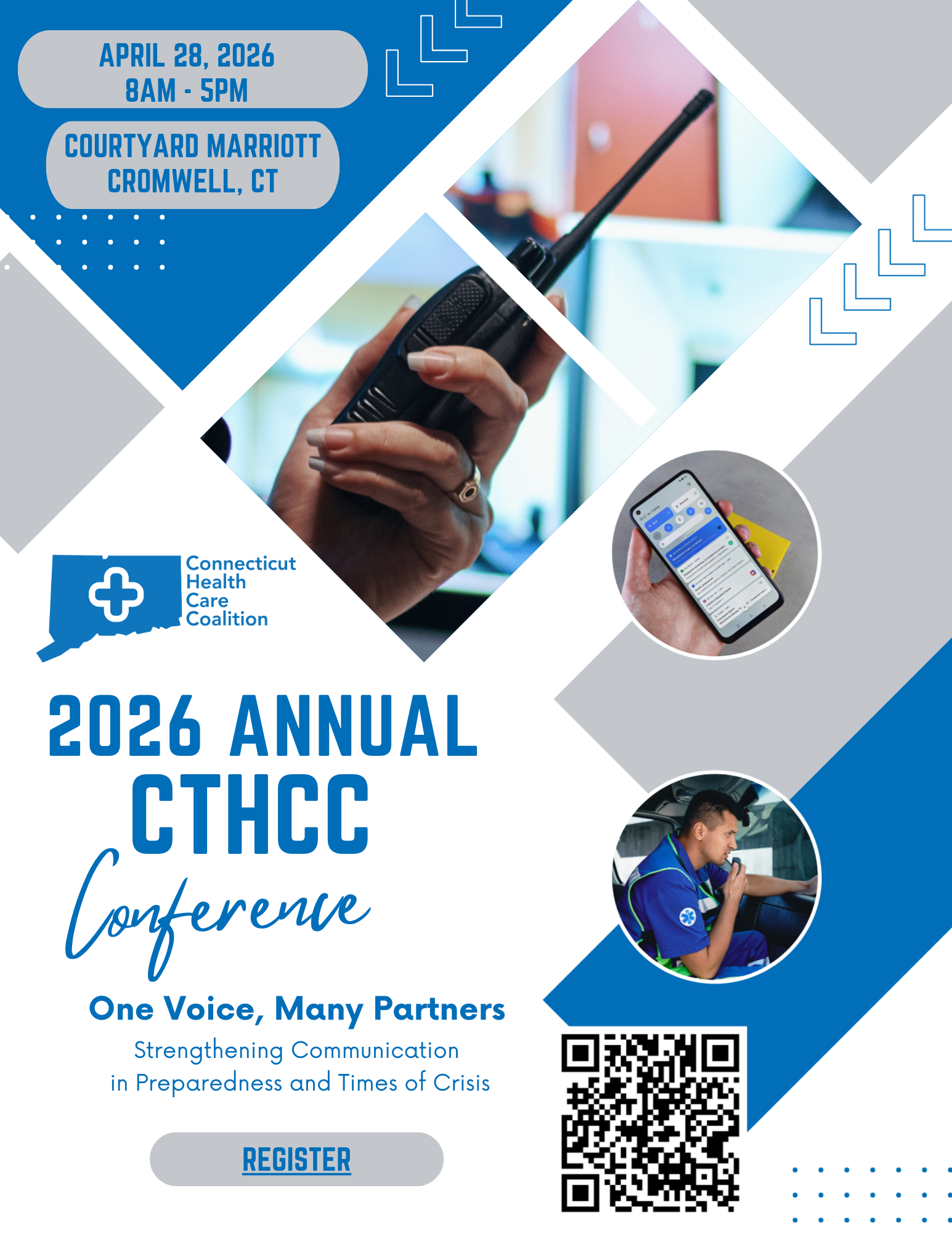
2026 CTHCC Annual Conference
emPOWER Emergency Planning De-identified Datasets (December 2025)
The de-identified (HIPAA masked) dataset includes at-risk Medicare beneficiaries from the Medicare Fee-For-Service (FFS/Parts A & B) and Medicare Advantage (CMS’ HMO plans/Part C) Programs that rely upon the electricity-dependent durable medical equipment (DME) and cardiac implantable devices and healthcare services that include ESRD (dialysis), oxygen tank services, and home health visits. Detailed information regarding the dataset is included in the Menu tab and the Data Overview tabs of the attached workbook.
State Zip Aggregation: We weren't able to identify geospatial boundary data for a number of the zip codes in the state. Due to this we have had to aggregate the data for those zip codes (child zip code) with another zip code that it resides in or next to (parent zip code) to ensure we didn’t lose population data associated with those zip codes. The third tab in the dataset provides the mapping for zip codes that meet this criteria.
Purpose: ASPR, in partnership with CMS, are providing limited de-identified Medicare data to State and local health departments to enhance situational awareness of and support emergency planning for and public health response activities for at-risk individuals that rely upon select electricity-dependent durable medical equipment (DME), facility-based dialysis and oxygen tank services prior to, during, or after an emergency or disaster. The DME that are included are: ventilators, oxygen concentrators, IV infusion pumps, suction pumps, at-home dialysis, electric wheelchairs and electric beds.
Data Source: The CMS dataset is developed from Medicare Fee For Service (FFS) Part A and B beneficiary administrative claims data (~32M 65+, blind, ESRD (dialysis), dual-eligible, disabled-can include adults and children) and Medicare Advantage claims data (~17M 65+, blind, ESRD (dialysis), dual-eligible, disabled-can include adults and children). This data does not include individuals that are only enrolled in a State Medicaid Program. It is important to note that Medicare DME are subject to insurance claim reimbursement caps (e.g. rental caps) that differ by type and therefore may have a different “look-back” periods (e.g. ventilators are 13 months and oxygen concentrators are 36 months) all of which are provided in the Menu and Data Overview tabs of the workbook.
Approved Data Uses: The de-identified dataset is approved for use by the state and local health department, either directly or in collaboration with their ESF-8, 6, 14 or other partners as appropriate, for public health emergency response, preparedness/mitigation, recovery and resilience activities. All other potential uses of this data require prior approval from ASPR and CMS that must be sent via ASPR Region 1 to Kristen Finne, HHS emPOWER Program Director.
Privacy Protections: As Medicare beneficiary privacy protection is our priority, all personal identifiable information has been removed from this dataset and numerous de-identified methods have been applied to significantly minimize, if not completely mitigate, any potential for deduction of small cells or re-identification risk. For example, any cell size found between the range of 1 and 10 is masked and shown as 11. Additional information about our privacy protection/de-identification methods can be located on the Menu tab. If a State or local health department were to identify a potential risk for deducing a small cell or re-identification, notification must be immediately to ASPR Region 1 and Kristen Finne.
Questions: For routine inquiries, please send an e-mail to ASPR Region 1 and the emPOWER Team.
You must be a member and logged in to access the emPower data.
Connecticut Joins the Nurse Licensure Compact
Connecticut has joined the Nurse Licensure Compact – an agreement among 43 U.S. states and territories that allows Registered Nurses (RNs) and Licensed Practical Nurses (LPNs) to obtain one multistate license permitting them to legally practice nursing in all participating locations.
The compact helps nurses avoid the process of applying for and obtaining a new license in each individual jurisdiction where they want to practice, enabling greater career mobility while also supporting their ability to practice during emergencies. Governor Lamont explained that by joining this compact, employers in Connecticut will have more support in responding to nursing shortages by increasing the pool of qualified professionals from which they can hire.